You brought a photo. You showed it to your stylist. Everyone smiled, everyone understood, and you thought, “Yep, this should be fine.”
Then at the end, you looked in the mirror.
It wasn’t quite like the photo.
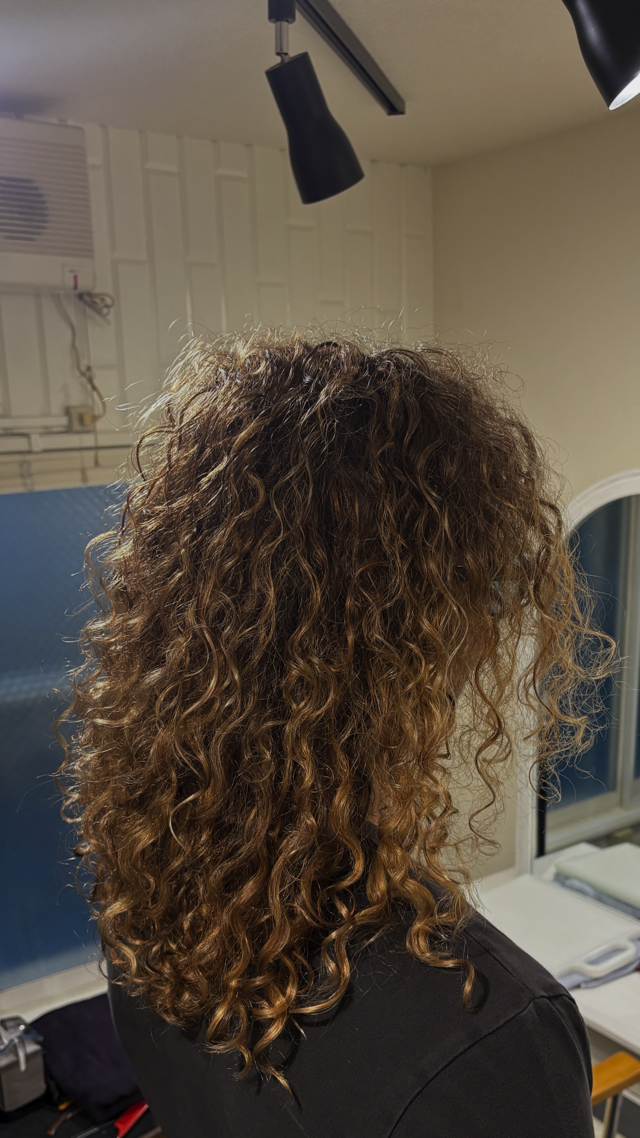
Maybe it was too dark. Maybe the colour looked muddy. Or maybe you saw a strange green or purple tone that you definitely didn’t ask for.
If this has happened to you in Japan, the first thing I want to say is this:
It probably wasn’t because your stylist was bad.
There are two main reasons why hair colour can behave differently in Japan.
Both are technical reasons. A little boring, maybe, but very important if you are having your hair coloured here.
I have been doing hair for 35 years, and I spent 13 years working in Australia and Germany. So I have worked with very different hair types, and I have seen this problem from both sides.
Let me explain.
Reason 1: There is a legal limit on developer strength in Japan
Hair colour and bleach need developer — hydrogen peroxide — to work.
The strength of the developer affects how much we can lift your hair in one application.
In Japan, hair dye is regulated as a quasi-drug (医薬部外品). The approval standard for hair dye products from the Ministry of Health, Labour and Welfare states:
Hydrogen peroxide must not exceed a concentration of 6.0% in the product.
— 染毛剤製造販売承認基準, Yakusei-hatsu 0628 No. 7, 28 June 2021
That means 6%.
Roughly 20 volume.
Overseas, 40 volume — 12% — is quite normal in professional hairdressing. It is something many of us were trained to use.
But here in Japan, I cannot simply use a stronger developer when I need more lift.
So sometimes, we have to do it again.
That is the important difference.
It is not necessarily about the skill of the stylist or the quality of the products. We are simply working under different rules.
And this is also why I cannot always tell you exactly how long your colour appointment will take.
Every head of hair is different.
Some hair lifts beautifully with one application. Some doesn’t.
If it doesn’t, I need to check the condition of your hair, decide whether it is safe to continue, and possibly go again.
I cannot know exactly what your hair will do until I actually start working with it.
Reason 2: Colour products here are designed for Japanese hair
This is something many people don’t know about, but I think it explains a lot of colour problems.
Japanese hair usually has a lot of strong red and orange pigment underneath.
When we lighten it, those warm pigments come out very strongly.
So one of the biggest jobs for a colourist in Japan is controlling that red and orange.
Naturally, many colour products made for the Japanese market are designed around this problem.
They often contain more green and violet tones because green helps cancel red, and violet helps cancel yellow.
On Japanese hair, that makes perfect sense.
It works very well.
But what happens when we use the same formula on hair that doesn’t have so much warmth underneath?
There may not be enough warmth underneath — the red and the yellow — for those green and violet pigments to work against.
So instead of disappearing, sometimes you can actually see them.
That is when you can end up with a green cast.
Or purple.
Or an “ashy” colour that went much further than you expected and became cold, grey or slightly green.
Again, it doesn’t always mean somebody made a mistake.
Sometimes the product was simply designed for a different canvas.
What does this mean for your appointment?
It may take longer.
Not because we are working slowly.
Sometimes we are doing in two or three stages what could be done with a stronger developer in one stage overseas.
Sometimes you may need more than one appointment.
If your hair is dark, previously coloured, or has been bleached before, getting to a much brighter colour safely may take two seperate appointments.
I would much rather tell you this before we start than surprise you halfway through.
A strand test is not wasting time.
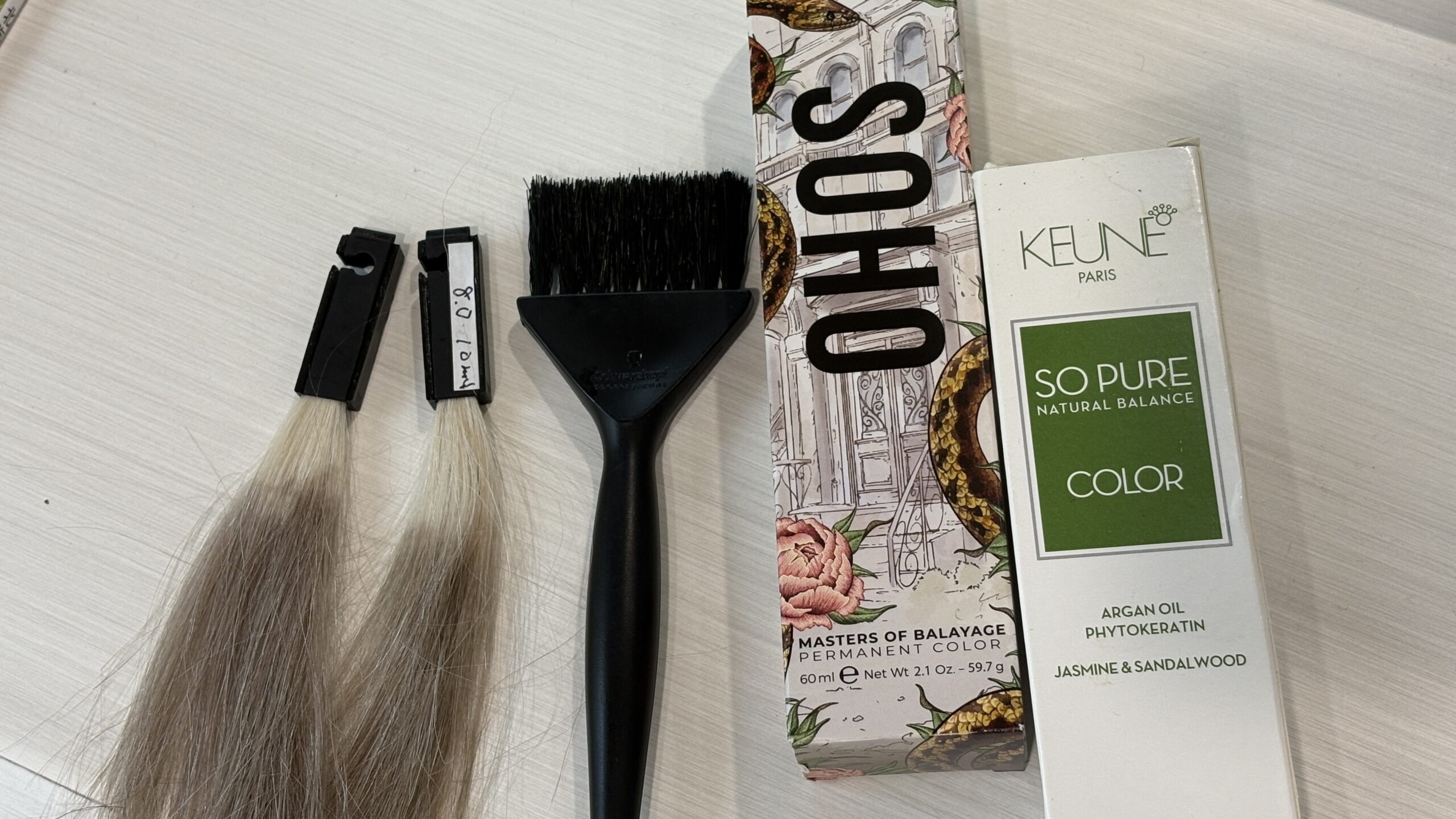
Sometimes it is the only way I can honestly see how your hair is going to react before putting colour or bleach all over your head.
And please bring your colour history, not only your inspiration photo.
This is very important.
Think about everything you have done to your hair during the last two or three years:
- Box colour from a supermarket or pharmacy
- Bleach, highlights or balayage
- Permanent straightening or keratin treatment
- Henna — please, always tell me if you have used henna
The photo shows me where you want to go.
Your hair history tells me whether we can get there — and how long it may take.
How I work with this
I cannot change the rules in Japan.
But I can change how I work within those rules.
I prefer to lift the hair in stages.
Rather than pushing the hair through one long process and hoping for the best, I prefer to work step by step and check the condition of the hair as I go.
It may take longer, but your hair is more important than the clock.
I choose the tone for the hair sitting in front of me.
I don’t automatically choose a formula just because it works well on Japanese hair.
If your hair doesn’t have a strong red undertone, I don’t need to use a formula designed to fight a lot of red.
That can make a big difference in avoiding those unexpected green or purple tones.
And I will tell you what I think is realistically possible before we start.
If your inspiration photo is four levels away from your current colour, but I think we can safely move two levels today, I will tell you while your hair is still dry.
Not after your hair is already wrapped in foil.
One honest note about where I am right now
At the moment, I have paused colour bookings.
I am currently studying for my Master of Balayage certification.
It has been seven years since I worked overseas, and during those seven years, colour trends, products and techniques have changed a lot.
So rather than pretending I already know everything, I decided to study it properly again.
My course finishes at the end of November, and I am planning to reopen colour bookings in December.
Until then, I am focusing mainly on cutting, treatments, perms and straightening — services where I can predict the timing properly and do my best work.
If you would like to know when colour bookings reopen, just message me on WhatsApp.
You don’t need to make a booking now.
I won’t send you advertising or anything else.
I will simply send you one message when colour is ready to book again, before I announce it anywhere else.
Tell me you want to recieve it, and that’s all.
And in the meantime, if you have had a colour that turned green, or you have an inspiration photo and you are not sure whether it is possible, you can still send it to me.
I am happy to have a look and tell you what I think.
Even if you never end up sitting in my chair.
— Yasu